

What we make during race week.
+
In 2025, two video products went out daily.
The 26-minute highlight show was the primary deliverable — broadcast on SuperSport and posted to YouTube. It covered each stage end-to-end across men's and women's racing, balancing amateur and professional storylines.
A separate 5–6 minute news cut was produced by QuattroMedia, distributed internationally through their syndication network and shared on the Nedbank Gravel Burn YouTube page.
01
26 Minute Highlights Show
+


At an 11:59 average view duration, the typical viewer drops off only five minutes into the 16-minute Stage Recap — the centrepiece of the show and the very thing they tuned in to watch.
By the time the day's racing properly unfolds, the majority of the audience is already gone.
Storyline & Script
Generic and Outdated +
The 26-minute show format has been repeated across many events in mountain bike, road, and now gravel cycling. The same mix of generic start shots that don't bring the viewer into the action or make them feel like they are part of the race.
The data confirmed it. Average view duration and viewer comments both showed the format wasn't holding attention. Viewers stopped watching past the 46.1% mark.
Scripting Inaccuracy +
Due to the high-stress environment, scripting inaccuracies appeared throughout all seven of the 26-minute shows. Incorrect names. Incorrect distances.
This resulted in re-recording full voiceovers, or dubbing sections that were very noticeable in the final cut.
Buried Lead +
The 26-minute show was built to recap the day. What happened on the road, both from the amateur field and, just as importantly, from the professional racing.
But the actual stage recap didn't start until past the 7-minute mark.
By the time the day's racing began on screen, the audience had already started leaving. The edit didn't leverage modern editing instincts. Modern viewers need to be hooked and held from the very first frame, and that wasn't built into the structure of the show.
Production Team
Gear Choice +
The production team shot exclusively on Sony cameras, without gimbals, off the back of motorbikes.
On a large-scale film production set, this approach would have sounded ideal. But by not working in a collaborative environment, not accepting footage from other cameras, the team was very limited when things went wrong.
The choice to shoot without gimbals also meant that a large portion of the footage was too shaky to use in the 26-minute show. The postproduction team was forced to use helicopter footage for the majority of the racing inserts.
This gear choice showed the team's lack of understanding of multi-day racing, and especially of multi-day gravel cycling events.
Shot Choice +
Once again, the team's lack of understanding of cycling meant they resorted to an almost "shoot for live" approach. They rolled cameras across the entire day with little understanding of what the final 26-minute show would look like.
The result was a wall of footage at the end of every stage. Real pressure on postproduction to find the best moments inside it.
Choices made on the road came from the same gap. On Stage 5, with a hilltop finish on Swaershoek Pass, the team chose not to follow the lead group as it split up the climb. They sat at a static location instead, looking for one decisive shot.


These are the raw clips, ungraded.
The shot was entirely out of focus.
This was one of the most important moments of the week. Tom Pidcock won the stage. The only usable footage was the helicopter and the drone.
And it points back to Gear Choice and the lack of collaboration. Pidcock's attack on the final climb was recorded on Warwick Purdy's camera. The production team didn't use it in the 26-minute show. QuattroMedia used it in the Stage News.
Pipeline Bloat +
On face value, the production had everything you'd want: a large, well-thought-out post-production system.
In practice, that system slowed the path from footage to final product. A team dedicated solely to ingesting footage became a bottleneck before the edit even started. The editing team didn't know what had been shot, and didn't understand cycling, so they couldn't find the moments that mattered.
The unnecessary push for a film-quality colour grade added another bottleneck to same-day delivery.
Worse, the grade was inconsistent. Colours shifted from shot to shot. The leader's jersey changed shade frame to frame. Brand- and sponsor-damaging.


Colour grade examples — same race, same week.
02
Stage News
+


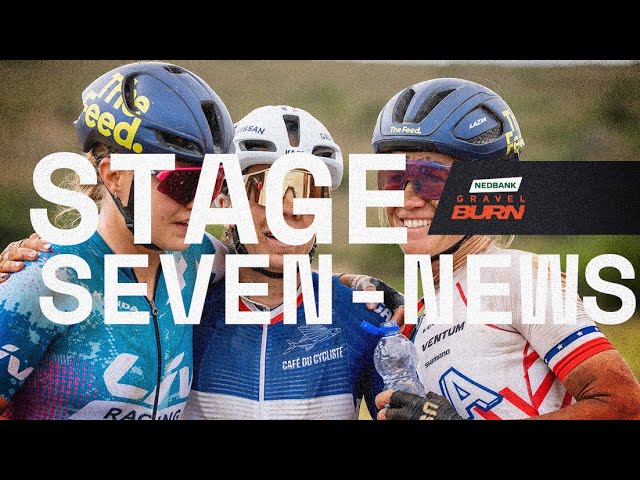
The short-form cut holds viewers far better than the long show — 60.4% average percentage viewed vs 46.1% on the 26-minute version. A tighter format is doing more of the work to retain attention.
Stage 1's news cut was missed during the race week and only uploaded after the event was over. Its 917 views — a fraction of the ~6,000 averaged across the other six stages — reflect the loss of in-event momentum; by the time it went live, audience attention had moved on.
The Stage News cut carries no results boards. Viewers don't see who won the stage, where the GC stands, or any of the actual race outcomes.
+
The overall approach in 2026 is to:
- Increase the quality of the 26-minute show (views, watch time, and average watch duration).
- Increase the number of products created by the Nedbank Gravel Burn (monetisation, reach, impressions).
01
Burn Camp Chat Daily New
+
This length allows for YouTube ads to run, increasing revenue and distribution.
A daily sit-down podcast-style chat from inside the Burn Camp. A two- or three-person conversation with riders from the day's racing.
Posted in the morning during the dead zone, when no other coverage is being produced. Each day's chat shifts in tone and topic depending on whether the guest is a professional or an age-group rider.
Every chat is cut down for short-form distribution as YouTube Shorts and Instagram Reels, multiplying the value of each recording.
Each episode is also edited into an audio-only podcast for distribution on Spotify, giving the content a second home and a different audience entirely.
Late afternoon.
Evening. Simple top and tail with switching between speakers.
9am the following morning.
- 10 min · YouTube
- 30 sec · Instagram Reel with CTA
- Audio-only · Spotify podcast
- 15–30 sec cutdown · Paid media (Meta + YouTube ads)
Paid Media Strategy. Each episode is cut down into a 15–30 second paid media asset and run concurrently with the YouTube release. Paid media at event time is an untapped lever for races in this space — a sharp one-liner or funny moment from the chat cuts through the conventional race content the audience sees organically, hugely increasing the reach of a product like the Burn Camp Chat.
Guest: Kevin Vermaak, founder of Nedbank Gravel Burn.
Topics +
- The growth of the gravel cycling industry in South Africa
- How that growth gave Kevin the idea to start Gravel Burn
- How Edition 2 differs from Edition 1
- Lessons learned from year one, with parallels to the early days of Cape Epic (which Kevin also founded)
- Where Kevin sees the race going next
Guest: The Assos Ember jersey wearers after Stage 1.
Topics +
Two paths depending on the racing outcome.
- Path 1 (Returning Leaders): If Matt Beers and a returning female rider from 2025 take the jerseys.
- What brought them back
- The growth of gravel worldwide
- How Gravel Burn is putting South Africa on the map
- Path 2 (New Leaders): If new riders take the jerseys.
- Why they came to Gravel Burn
- What they'd heard about it
- Segue into other races they've ridden
- Shared racing insights between guest and Dan
- Both paths close with a round of rapid fire questions
Guest: Nino Schurter and an amateur or influencer rider.
Topics +
Riding for the love of it.
- How retirement from the top level has reshaped how Nino views the sport
- The challenge and enjoyment he's finding in gravel racing
- Nino balancing life as a new dad
- The amateur or influencer's experience of Gravel Burn so far
- How the amateur trained for this race while holding down a job
- Fitting riding into a busy life. Different lives, same problem.
- What "riding for the love of it" looks like from both ends of the spectrum. The rider who's done it all. The rider who never aimed to.
- Both stories close with a round of rapid fire questions
Guest: TBC
Topics +
TBC
Guest: TBC
Topics +
TBC
Guest: TBC
Topics +
TBC
Guest: TBC
Topics +
TBC
Guest: TBC
Topics +
TBC
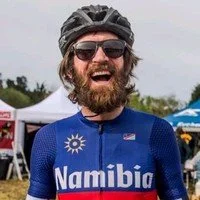
Namibian former WorldTour and Olympic road cyclist, now a gravel aficionado. Laid-back and approachable but with genuine authority, he draws the best out of his guests around the fire — a relaxed in-camp conversation that still reads the racing like only an ex-pro can.

Three-person interview, recorded around the Burn Camp campfire.

Top-down · three tights on each talent · one wide on the whole scene.
02
Tech from the Burn Stage 4 New
+
This length keeps the video ad-eligible. Targeting 8 minutes unlocks mid-roll ads, multiplying revenue per view.
A walk-and-talk style video shot in the afternoon of the short stage, wandering the Burn Camp to find the most interesting bikes, builds, and tech setups in the race.
The casual format is well-established in cycling content. BikeRadar has perfected it with their tech walks at Traka.
The format works for two reasons:
- It shows bike tech in a unique, unrepeatable location. The Karoo, mid-race.
- It positions Nedbank Gravel Burn as a race where riders and brands come to test new products
Afternoon of the short stage (Stage 4, the Merino loop).
Post stage. Simple edit with a host.
That evening.
- 6–8 min · YouTube
- 30–60 sec cutdowns · Instagram Reels + YouTube Shorts
BikeRadar's tech walks at Traka. Casual, conversational, handheld. Lets the bikes do the talking.
 ▶
▶
03
The 26 Minute Show Rebuilt
+
Length kept to honour the SuperSport broadcast deliverable. The format inside is rebuilt.
The 2025 show lost the audience inside the very thing they tuned in to watch.
Viewers dropped off five minutes into the 16-minute Stage Recap — the centrepiece of the show, the only reason anyone showed up. By the time the day's racing properly unfolded on screen, the majority of the audience was already gone.
Three structural failures in the 2025 format.
3:45 of Insert / Intro followed by 3:15 of previous-stage recap. Seven minutes before the day's actual racing began on screen. Modern viewers need to be hooked from frame one. The 2025 edit didn't even try.
The 2025 show ran scripted voiceover stitched over silent race footage. No real audio. No tactical commentary at the moment of the move. The audience couldn't feel the race because the edit had nothing to feel through.
A wall of continuously-rolling footage from motorbike-mounted cameras buried the moments that mattered. Post-production had to wade through hundreds of hours to find a story that should have been captured deliberately. Stage 5 Pidcock attack was missed on the main camera — Warwick Purdy's drone footage saved the cut.
Proposed changes for 2026.
The following changes are proposed to:
- Make the show more engaging.
- Increase watch time and overall view percentage.
- Differentiate the Nedbank Gravel Burn from all other races in South Africa.
- Showcase both the amateur and professional side of the race.
- Better scripting to speed up post production.
Walking Host.
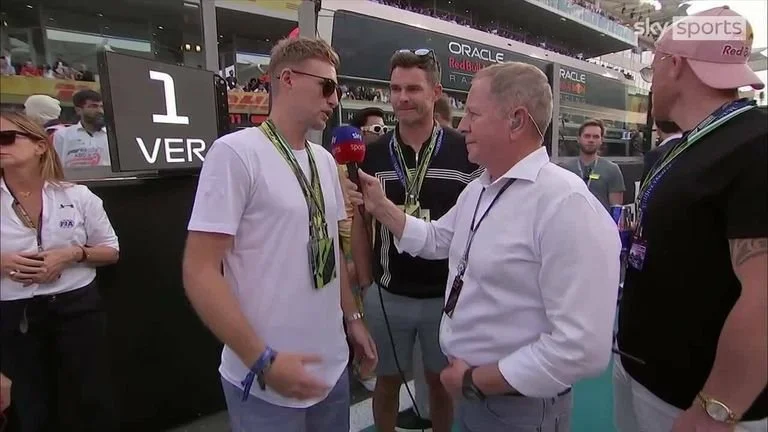
Manon Lloyd becomes the show's connective tissue. She walks the start chute in the Martin Brundle F1 grid-walk tradition, grabbing impromptu interviews with riders, race directors, sponsors and the characters in the field.
Energy from the first frame. No slow build. Real personalities on camera before the racing even begins.
This format is brand new to South African race-recap content. The walking host alone differentiates the show from anything any other production house in the country has put out.

Helicopter Commentary.
Gerald De Kock in the helicopter. GoPro'd up and mic'd, capturing live race commentary at the moment of the race-defining attack. Not stitched in via voiceover after the edit is locked.

Lifetime Grand Prix have built their post-production show around this exact principle. Live race audio and commentary gives the edit a texture and tension a scripted VO never reaches. All Gerald needs to do is contextualise the winning move or the view from above — the rest is captured naturally.

Smarter Camera Deployment.
Gravel is not MTB. We don't need to roll the entire time waiting for a crash or a slip. The 2025 production generated a wall of footage and buried the moments that mattered inside it.
The Tour de France and the Classics work because the production knows where the moments are. Intermediate climbs. Intermediate sprints. The final ten kilometres. We shoot the same way: strategic points, not continuous rolling. Smaller pile of footage, sharper story, far faster to cut.
Crew model:
- 1 cameraman per racing group (Men's, Women's)
- 1 roaming backup per group — gets creative, follows the breakaway, can step away from the pack
- One camera always stays with the leader's jersey
What changed: the audience is into the racing inside seven minutes (2025: only after eight), and they're hooked from the cold open instead of waiting through a static intro. The Stage Recap stays the headline product — but the helicopter audio and the smarter camera deployment mean every minute inside it is earning attention, not bleeding it.
+
The case for this rebuild isn't a hunch. The Lifetime Grand Prix YouTube channel — produced by Cold Collaborative, 91k subscribers, gold standard for long-form gravel race coverage — has a 770-comment thread on its 2024 UNBOUND highlights cut. The audience told the production team exactly what works and what doesn't. The pattern maps onto the three changes above with unsettling precision.
"...this video edit, 48 hours later, is epic! Watching Call of a Lifetime is what got me into gravel biking and the Life Time team continues to bring the heat."
IG real-time → fast video edit → docuseries that recruits new fans into the sport. NGB already has the first two. The walking-host format inside the daily show begins building the third.
"I want to see the race. I specifically don't want to see the commentators. The presentation style of this and the other Life Time Grand Prix videos is very much a presentation of an epic event, but I feel like frequently the race suffers because of it. If we remove all the introductions, histories, interviews, etc, we're down to less than 40 minutes."
Every reply in the 76-comment thread agrees. The audience is asking the gold standard to talk less and race more. A sample of the agreement:
"More race footage would help if it's going to be marketed as a race highlight…kind of misleading"
"This is a bike race, let's talk about the tactics and outcomes of the race"
"Give the footage to Lantern Rouge and we'll have a more informative 10 minute summary than this whole coverage."
The walking host is on the start line, in the chute, with the riders — not at a desk talking around them.
The helicopter commentary is live race tactics from above the bunch as the move happens — not stitched in afterward.
The smarter camera deployment captures the strategic points and trims the wall of footage. Every change targets the audience demand head-on.
"whoever was the drone pilot at the women's sprint finish — I will buy him a beer. WOW WOW WOW. you guys rock"
"That drone shot at 57:48 is absolutely INCREDIBLE"
Four separate top-line comments on the same drone moment. The audience notices and recalls specific cinematic craft by timestamp. One protected set-piece per stage earns named praise.
"Lachlan just chillin with a PBR post-race, what a legend…"
"LDC's laugh is perfect for a horror movie. So glad to see Hannah and Dylan slowly but surely making progress."
The comments don't quote stage times — they quote first names. Story-driven coverage builds named-rider fandom. The walking-host format is exactly how that gets built, stage after stage.
"ONE PERSON edited this? Blake my dude what the fuck. How much caffeine did you consume in the last 3 days? Great fucking job to the film crew, sorting this footage, and clipping this together."
When the edit is good, the editor gets named. That's brand equity for the production house — and the event — in the same beat.
The most-liked critique on the gold-standard channel says race-tactical commentary is missing. Even Lifetime Grand Prix — with Cold Collaborative behind them — is being told their show talks around the race rather than inside it.
That gap is what Gerald De Kock in the helicopter fills. Live tactics commentary, from above, in the moment of the attack. Not a voiceover written after the edit is locked. The race-first format the LGP audience is asking for — applied to NGB before anyone else gets there.

Start-line walking host. Welsh former pro cyclist turned broadcaster, best known as a presenter for GCN. A natural interviewer who knows the peloton, working the chute in the F1 grid-walk tradition.
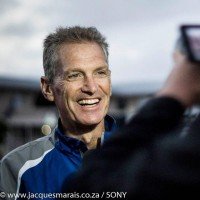
Helicopter commentator. One of South Africa’s most experienced sports broadcasters — decades behind the mic on cricket and cycling, including the Tour de France and the Grand Tours for SuperSport. The authority and race-reading to call the decisive moves live, from the eye in the sky.
04
Two Worlds, One Race Post-Event New
+
A long-form documentary, comfortably ad-eligible on YouTube. Released after the event — when the result is in and the story has its ending.
A post-event documentary that tells the full Nedbank Gravel Burn through two riders — both backed by Assos, both on the same start line, but riding the race in two completely different worlds.
One is Laura Petri, an Assos Ambassador and amateur rider taking on the Burn for the adventure and the personal test. The other is a professional rider chasing the win at the sharp end of the race.
Cut against each other across all seven stages, the film draws out how different — and how unexpectedly similar — their races are. The same Karoo, the same heat, the same camp, the same finish lines, lived from opposite ends of the field. Two worlds, one race.
Assos
Throughout the event — both riders followed across all seven stages, on and off the bike.
Post-event, once the result and the full arc of both journeys are known.
2–4 weeks after the race — sustaining the channel into the off-season.
- 20–30 min · YouTube feature
- Trailer + 30–60 sec cutdowns · Instagram Reels + YouTube Shorts
- Assos co-branded · shared across both Gravel Burn and Assos channels
Zayne Botha
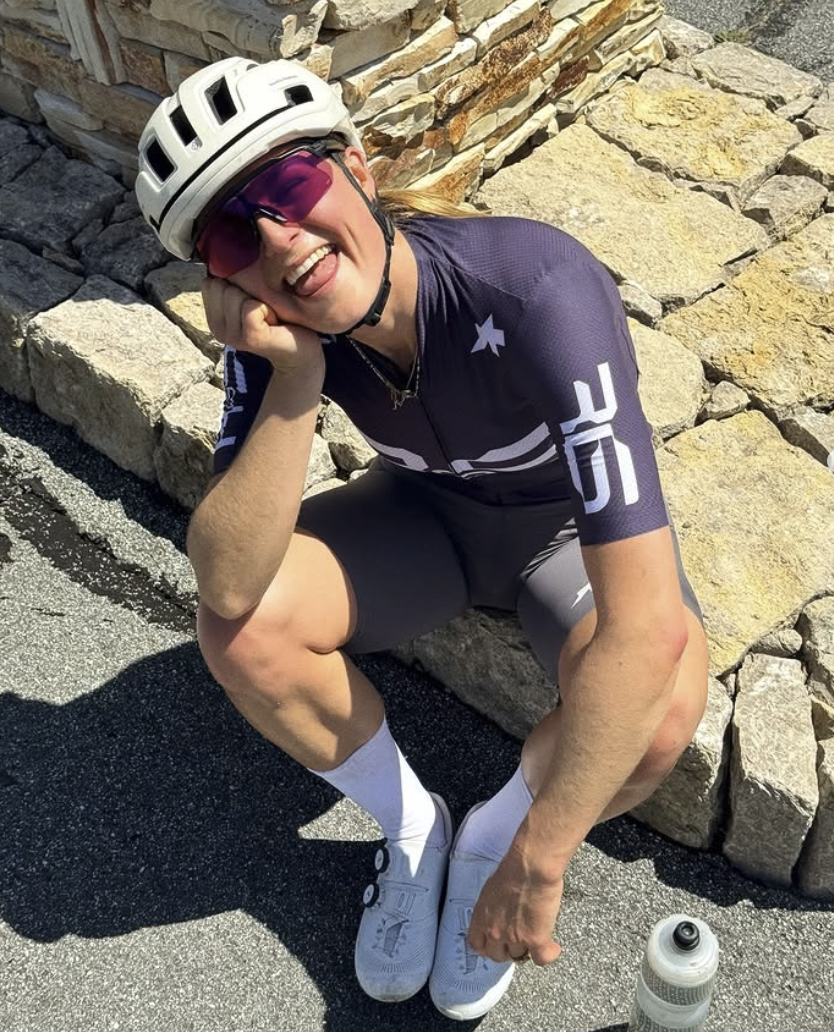
Copenhagen-based gravel rider, content creator and founder of the LP Collective — a movement community running events, retreats and training camps across Europe. An Assos of Switzerland ambassador whose ~74K following is built on gravel adventures rather than results: exactly the amateur, adventure-first side of the Burn.
Her audience also gives the film built-in reach the moment it lands — and gives Assos a second channel for the co-branded cut.
@laurapetri · Instagram →An Assos-backed professional — male or female — racing for the result at the front. The elite counterpoint to Laura's amateur journey, confirmed closer to the event.
- One race, two audiences. Following an amateur and a pro side by side speaks to the whole 500-rider start line — age-groupers and elite field alike — in a single film.
- A natural brand story for Assos. Two riders in the same kit, two completely different races — the product shows up authentically in both worlds, without a hard sell.
- Evergreen, off-season content. A post-event feature keeps the channel alive after the race and becomes a year-round asset to help sell the next edition.
- Emotional, not just results. Documentary storytelling travels far beyond the finishing order — exactly the kind of content the gravel audience shares.
Sponsor-led, not sponsor-stuffed. Two Worlds, One Race is built around the brand from the ground up — Assos isn't bolted onto existing footage, it's the spine of the story. That makes it a far easier sell than ad slots, and a piece both the event and the brand will want to push.
+
The 2025 Instagram feed ran on a small set of repeating templates — podium cards, leaderboards, sponsor stills and the occasional cross-promo reel to YouTube — set against a strong photography backbone and an instantly recognisable orange-and-black brand system.
The visual identity held all week. The product mix didn't. By Stage 3 the feed was visually exhausted, race-day timing slipped behind the live audience, and the amateurs who make up most of the 500-rider field were almost invisible in the channel that should have been their loudest stage.
01
Pro Rider Portraits
+
Single-image race-day portraits of the top professionals — Tom Pidcock, Matt Beers, Sofia Gomez Villafañe, Henk de Beer, Dan Craven in Namibia kit. Strong photography, well-graded.
The strongest editorial output of the week — closer in feel to a Toyota Specialized brand spot than to event content, which is both a compliment to the craft and a tell on the strategy.
02
Bike Checks
+
Close-up reels walking through riders' builds — the bikes, the components, the setups. A simple, repeatable format that consistently punched above its weight on the feed.
Among the best-performing content of the entire event — and the clearest signal that this audience is hungry for bike and tech detail. That demand is exactly why we're building Tech from the Burn for 2026.
03
Final 1km Reels
+
Reels capturing the closing kilometre of each stage — the run to the line, the sprint, the finish. Good energy, and some of the most watchable race-week content on the feed.
But they were also the only reels that used actual on-route footage — the racing itself barely appeared anywhere else. The appetite was clearly there; the supply wasn't.
The channel's own engagement data points one direction. The atmospheric landscape Reel (windmill at golden hour) landed at 706 likes. The stage podium card landed at 137 likes.
5× engagement on atmosphere and emotion over results graphics. The audience said clearly what it wanted. The product mix didn't shift to meet it.
+
01
Item title
+
Description goes here.
The crew producing every product across race week — a lean, senior team built to shoot, edit and publish daily from the Karoo. A hybrid crew between Bigshot Media and the event's content team.


- Cinematic + FPV
- Additional Inspire 3 content of the race village and the Night Burn

- Two Worlds, One Race (documentary)
- Daily edits (TBC)

- Start intro with Manon Lloyd for the 26-min show (daily)
- On-route beauty + action
- Tech from the Burn (Stage 4)
BigShot Crew
Suggested
+
Suggested additional crew to scale the team for race week — proposed, not yet confirmed.
- Lead Men's CameraDoug Le Roux
- Lead Women's CameraZander Van Vuuren
- Helicopter CameraMark Le Roux
-
Lead EditorJean FourieLead EditorIsaac van ZylClosely managed by Warwick Purdy